The Birth of the Borderline: From Narcissist Scapegoat to Healer
Google what the most painful mental illness: the answer you'll get is Borderline Personality Disorder.
If you Google what the most painful mental illness is to suffer from, the answer you'll get is Borderline Personality Disorder.
People often wonder: why do some people who experience child abuse grow up to be abusers, but others grow up to be loving people, intent on ensuring they do not harm people in the ways they were harmed throughout their lives?
Is it possible to be born into a narcissistic or sociopathic family structure and grow up to an empath, someone who feels the feelings of others keenly and seeks to nurture, heal, and protect them?
It’s not only possible, but it’s nearly universal in sociopathic families: narcissistic abuse is how highly empathetic people are made.
The empaths are the scapegoat children.
But an overly sensitive empathy--which is a main thing that causes us suffering--is only HALF the story. There's much more to BPD, which includes self harm, trauma bonding to abusers, low self esteem, and lack of boundaries, among other symptoms.
Scapegoats are necessary in these family structures because narcissists and sociopaths have shame-avoidant brains.
Since they cannot process shame, they must project it.
They must punish other people for their own sins and make them feel the grief they cannot process.
Narcissists believe in REVENGE, unequivocally.
And since they cannot process their own guilts, they need scapegoats to survive.
They need someone to blame.

All narcissists will generally have whole groups of people they hate and scapegoat based on arbitrary delusions that they assign meanings of hierarchy to, like race or gender or sexuality.
But in their daily life, they need both adoration (positive supply) and abuse/scapegoating (negative supply) in order to regulate their emotions and feel good.
They typically will scapegoat their spouse: in a sociopathic family, it’s common that both parents are sociopaths, and they serve as live-in scapegoats to each other. They hate each other, abuse each other, fight relentlessly, and show little affection.
But children can serve as both positive and negative supply simultaneously: without a developed brain, they are very easy to manipulate and traumatize. Additionally, they are vulnerable, and even child abuse laws do very little to protect them. Thus, they feed the narcissistic need for control.
And no matter how much they are abused, they love their parents and see them however their parents demand to be seen in their grandiosity. They are gullible and believe what they’re told.
For a sociopath, they can enact their darkest demons onto children without consequence. This is also why many of them choose careers in which they work with children or vulnerable people in positions of power.
A person with NPD has split thinking about people, and this is also true for their children.
There are three categories: golden, scapegoat, or invisible.
They are decided at birth, and you can tell by how they are named.
Golden children are the next generation narcissist and/or sociopath.
They are considered an extension of the narcissist and expected to embody their entire identity. They will be given a name that closely mirrors the narcissist parent.
They’ll be a Jr., have rhyming names, have the parent’s first name as a middle name, or have the same middle name.
But no one can stay golden with a narcissist, so the narcissist will split the golden child in early childhood and introduce the cycle of abuse, but they will also be intermittently spoiled.
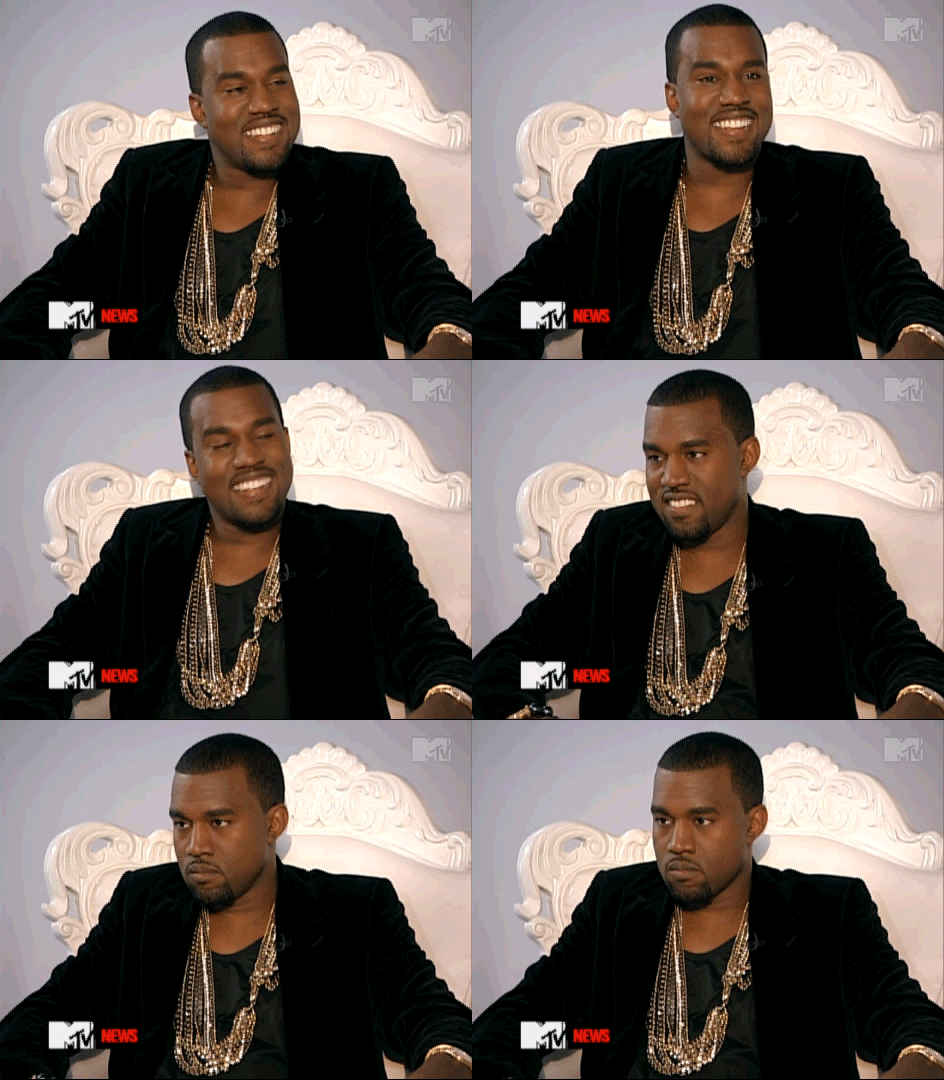
Famous narcissist: Dad=Ray. Ray rhymes with Kanye.
The invisible children develop Histrionic Personality Disorder. They will have the emotional intelligence of a middle schooler, and they will be very flamboyant and attention seeking and sexual. They are given common names (Sarah, John, Chris) or names that go outside of the family patterns (all names rhyme except the histrionic child, for example).

Famous histrionic: Kim is a common name. (Kourtney has Kris’ middle name and Kylie’s middle name is Kris. Robert is named after their father. Golden children of the family).
The scapegoat children will develop Borderline Personality Disorder. They will have the emotional intelligence of a high schooler. They are named after someone who died tragically or former supply of the narcissist who they hate.
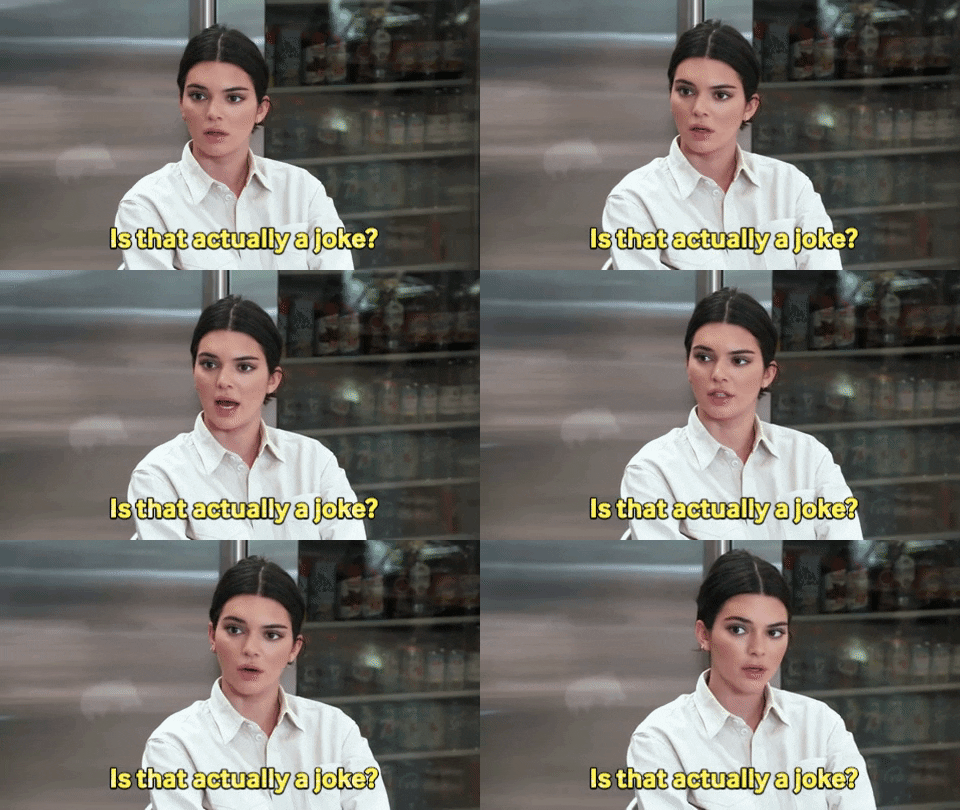
Famous borderline: Kendall’s middle name is Nicole. She is named after OJ Simpson’s murdered wife. Someone who died tragically.
They also commonly have horrific birth stories, in which they nearly died at birth…
…as if even the womb was a place where we fought to survive, our very births were traumatizing.
They will be people pleasing, sweet, and highly empathic.
They develop high empathy as a trauma response.
Because they are scapegoated at birth, the only way for a child to survive an environment in which their parent who they love hates them is to deny it.
They internalize the projections of the sociopath parents instead.
They come to believe they deserve the abuse.
They try very hard to be perfect, to be better, to be good.
Their abuse only increases.
And in a narcissist family structure, it isn’t unusual for the scapegoat child to be the only person in the family who regularly cries or shows any emotion, including affection/love.
Due to this, their family tells them they are abnormal, crazy, and weak.
This is also narcissistic projection, as expressing emotions is normal and healthy, as is empathy — both of these things allow you to process pain without harming others by needing to project it — but because the scapegoat child is different from their family, this gaslighting is very persuasive.
We begin to self harm and have suicidal ideation as children. My first suicide attempt was at eight, but I wrote letters and diaries wanting to kill myself from my earliest writing.
The narcissist parent will train the golden children to abuse the scapegoat from a young age.
Before my sister could speak, my mom would encourage her to hit me when she was beating me. She really got a kick out of it and would instruct her where and how to abuse.
By teen years, the golden child will hate their sociopath parents and often use the empathic sibling as supply. However, they always betray them eventually, as they do everyone.
They deeply resent any successes of the scapegoat child and how lovable they are due to how kind and empathetic they are.
Children, animals, even other narcissists or sociopaths are drawn to them, which, to a narcissist is power.
Attention.
Love.
The thing they can never feel or authentically be. A THREAT TO THEIR GRANDIOSITY.
A mirror that reflects back to them their shame, poised to unmask them to the world.
So they lash out in revenge to remind the empath that they are worthless.
No narcissist hurt me more than my sister. After her betrayal, I thought, if this does not kill me, nothing will.
There is also no narcissist in this world who I love more unconditionally than her. There is nothing I would not forgive of her.
Because I not only saw, but I felt — as the only person in that home with empathy — her childhood trauma.
She is a major key to my understanding of how NPD and BPD are created. I can no more blame her for her trauma responses and mental health than I can blame myself for mine.
Borderlines often make sense of their empathy by doing the following:
- Living in delusion: they believe everyone has empathy.
- Living in denial: they don’t think there’s anything abnormal about their empathy or that they have a personality disorder — they just think it’s depression, but they struggle to cure it or keep it from plummeting to dangerous self harm.
- Attributing spiritual meaning to it: they see it as a special gift, a magical power of light they are meant to shed on the world. As such, they make sense of their repeated interactions with narcissists as the demons or evil forces they are meant to either heal or battle.
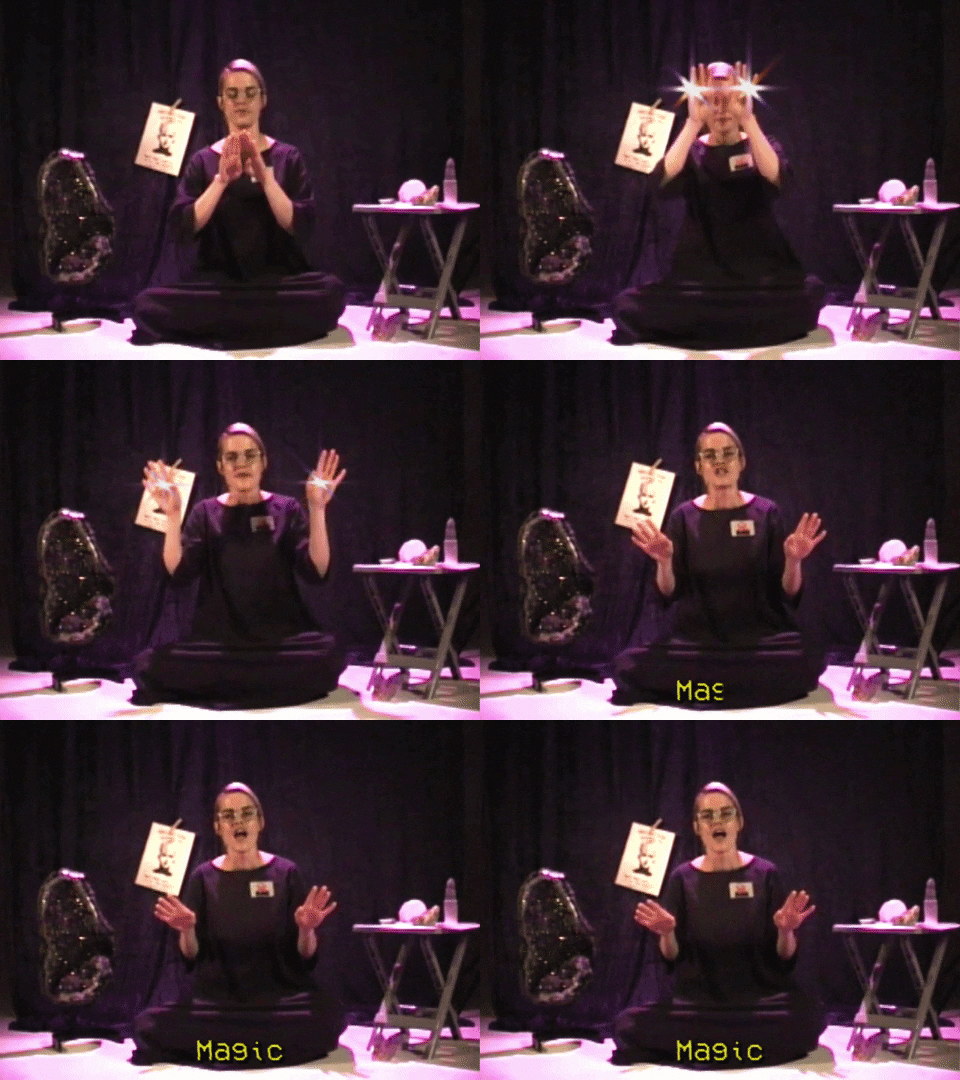
(I lowkey still question if my spiritual life purpose is to either heal or battle narcissists. I honestly hope I’ve helped some of them heal some things, but I often feel I’m in some spiritual warfare I got drafted into against my will).
I questioned for a time if I was psychic due to my empathy. I can feel profound pain in people. Narcissists and sociopaths tend to hate me because I can intuit their deceptions and unmask them. I’ve discovered cheating, for example, only through having dreams.
Another example of the uncanny empathy: I walked into a new class in 2020 (students were masked), and I zeroed in on one girl and thought, “She’s grieving.”
After a couple weeks of feeling this, with no sign of grief from her, I asked her after class if she was okay. I told her I sensed something. She burst into tears and told me her brother died in a car accident two months previous.
This happened so often to me that I read a lot about psychics trying to figure out if I was one.
But the truth is, it was trauma.
As a teacher, this empathy has given me high rewards. There are always a few students who hate me, but, for the most part, students — even students with NPD — react to me with love.
Nothing created more cognitive dissonance in me than the effusive love I received from students, in the form of touching cards, gifts, and student evaluations, when my personal life — with my family, lovers, and friends — was always imploding.
This level of empathy is a powerful gift, but it’s also a curse we bear.
To survive their childhood, scapegoats had to constantly read the tumultuously shifting moods of toddlers in adult bodies who used them as a surrogate parent, a target for revenge, a mirror of self loathing, and an trash can for their darkest addictions and shames.
The very thing we needed to survive was constantly trying to kill us.
Essentially, developing an overactive empathy was adapting to an environment in which you needed to be crafty prey.
The average life expectancy of a scapegoat child is 38. In addition to mental illness, suicidal ideation, and trauma bonding to narcissists, we develop a range of health issues, because the effects of abuse and trauma manifest in our bodies.
We are often rape victims or murder victims. Because we agitate sociopaths severely.
Here is Gabriel Fernandez, a famous scapegoat in a sociopathic family. He was tortured by his parents and siblings horrifically. CPS was regularly called. He was locked in a chest at night to sleep and made to eat cat feces. Eventually, he was beaten to death at 8 years old.
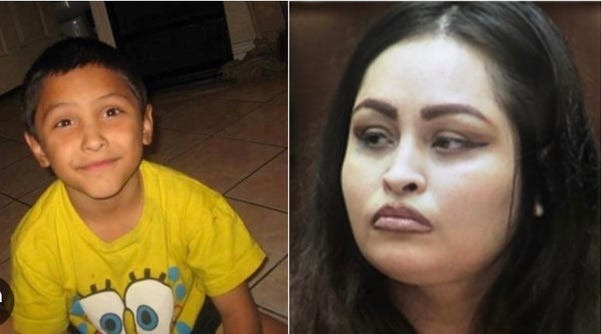
His parents said he deserved it. He was a bad kid.
They never showed a hint of remorse at trial, and are both said to be violent as prisoners as well.
Here is a letter he wrote at school, showing his BPD in childhood. It looks very much like my own childhood diaries.

This is how empaths are made.
We are the sacrifice a narcissistic culture makes to ignore, deny, and refuse to educate about, research about, or treat NPD or ASPD.
“If your own story is one you aren’t sure you can survive, remove whatever sharpness you can from another person’s life.” — Andrea Gibson
Subscribe to my blog, Blooming on the Borderline!
A new blog sent to your email twice a week for $5 a month.


For individual coaching to recover from narcissistic abuse, BPD, or sexual assault, visit https://am-champion.com
If you’d like to support my writing, hit the clap, check out my books, or Buy Me a Coffee.
For a copy of any of my books, check out this link:

Anne M. Champion is the author of This is a Story About Ghosts: A Memoir of Borderline Personality Disorder (KDP, 2024), Hunted Carrion: Sonnets to a Stalker (KDP, 2024), She Saints & Holy Profanities (Quarterly West, 2019), The Good Girl is Always a Ghost (Black Lawrence Press, 2018), Book of Levitations (Trembling Pillow Press, 2019), Reluctant Mistress (Gold Wake Press, 2013), and The Dark Length Home (Noctuary Press, 2017). Her work appears in Verse Daily, diode, Tupelo Quarterly, Prairie Schooner, Crab Orchard Review, Salamander, New South, Redivider, PANK Magazine, and elsewhere. She was a 2009 Academy of American Poets Prize recipient, a 2016 Best of the Net winner, a Douglas Preston Travel Grant recipient, and a Barbara Deming Memorial Grant recipient. She has degrees in Behavioral Psychology and Creative Writing.