
When Children Kill: The Tragic Case of Carly Gregg
A child, a gun, a mental illness, and a broken justice system
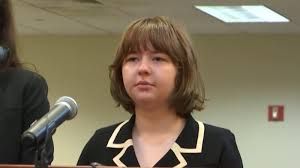
I was scrolling through TikTok when the algorithm offered me a lurid true crime story: the tragic case of Carly Gregg, a 14 year old who killed her mother in 2024.

Whenever I see the rare case of a child murdering a parent, my first thought harkens back to my own fraught childhood:
What horror is that parent guilty of committing against that child?
It’s almost a kneejerk reaction for me to presume the parent was a sociopath — and the child either a budding one or a scapegoat child pushed to fight for their life.
The news clip blared: “This 14 year old with bushy bangs is a cold-blooded killer.”
The sentence struck me immediately: why did they feel the need to insult her hair? Is the crime not horrific enough?
I also noticed how they asserted her EVIL before ever giving the details of the crime — something that disturbed me, given her age.
In truth, the case of Carly Gregg is one of the most heartbreaking and emotionally charged criminal cases involving a young person in recent memory.
It appears that it’s not a case of sociopathic parents, which makes it all the more tragic.
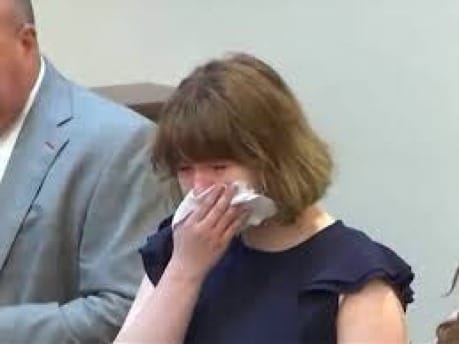
Much of the public discussion surrounding Carly has focused on the shocking violence of the crime itself and the spectacle of her young age — she stole her mother’s gun and shot her in her room, which was captured on home surveillance camera.
But far less attention has been given to the deeper psychological and emotional context surrounding her life, which warrants attention, especially given that this child was given LIFE IN PRISON.
When a child commits an unthinkable act, society often rushes toward outrage and punishment before fully examining trauma, mental illness, grief, which are the neurological realities of adolescence that no child has the freedom to choose.
Carly’s story forces uncomfortable questions about what happens when a deeply struggling child breaks under pressures that adults themselves might not survive.
One of the most tragic elements of Carly’s story is the loss of her 18 month old younger sister during childhood when she was 4 years old.
It’s well documented that early childhood grief can profoundly alter emotional development, especially when the loss is traumatic or unresolved. Adoption studies showcase that even losses that people have no memory over in infancy can have lifelong impacts.
Carly’s family has repeatedly asserted that this, along with her parents’ divorce that followed, is when her earliest signs of mental health disturbances began to manifest as severe depression.
Without the ability to process shame, children therefore cannot process death the same way adults do. Their brains are still developing emotional regulation, identity formation, and coping skills. They need professional help and a stable, safe environment to do so safely.

Research consistently shows that childhood bereavement can increase adult vulnerability to depression, dissociation, anxiety disorders, impulsivity, and severe emotional instability later in life.
For some children, grief becomes frozen inside the nervous system, resurfacing years later in destructive ways. This is the nature of cPTSD.
Compounding this, Carly Gregg has a history of mental illness running in her family tree, with disorders including Schizophrenia and Bipolar Disorder. Carly reported to psychologists that she’d heard voices since childhood. She’d also been taken to treatment and was recently given new medication at the time of her mother’s murder.
This isn’t to excuse violence (though I do believe in humane mental health care for children with budding NPD and ASPD as well), but it does complicate simplistic narratives that paint troubled children as simply “evil” or irredeemable.
Adolescents experiencing severe mental health crises often act from distorted thinking, emotional flooding, paranoia, impulsivity, blackouts, repetition compulsion, or dissociation rather than rational adult intent.
In cases like Carly’s, the public frequently demands certainty and moral clarity when the psychological reality may be profoundly chaotic and tragic.
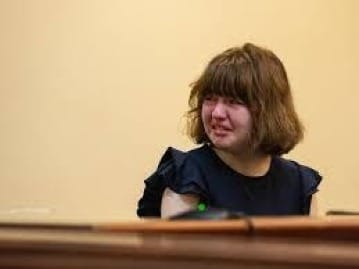
Another overlooked dimension of the case is the role of Carly’s family. The advocacy group “Carly’s Warriors” demonstrates that even after unimaginable loss, family members continue to believe Carly deserves compassion, treatment, and a fair legal process. Their calls for a new trial reflect a belief that her mental illness and developmental vulnerability were not adequately understood or represented.
Families who continue financially and emotionally supporting incarcerated loved ones are often harshly judged by the public, yet their support can stem from recognizing the complexity of the person behind the headlines.
It’s also important to note that one of her supporters is also her victim: her stepfather who she also shot. He testified at trial that she was a sweet, loving child, and he still talked to her daily after the tragedy. He testified that he didn’t believe he was her target, as she seemed to be seeing or experiencing something that terrified her.
Her family members should be considered, especially as they are the main victims of her crime. They don’t only experience the grief of the tragic loss, but they convey the child they once knew, the warning signs they fear were missed, and the devastating collapse of an already struggling young mind.
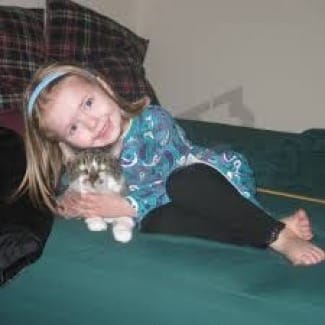
Carly’s family and supporters describe her as a talented, creative, sensitive, and exceptionally bright young child who is enduring unspeakable trauma as a mentally ill and vulnerable child in our abusive adult prison system.
The issue becomes even more disturbing when considering the realities children face inside our prison system.
Incarcerated youth are at heightened risk of assault, exploitation, self-harm, suicide, and psychological deterioration. Numerous human rights organizations and mental health experts have warned about the catastrophic effects of placing mentally ill children in punitive environments in America rather than therapeutic ones.
Solitary confinement, which Carly endured for six months after her arrest, is especially dangerous. Isolation can worsen psychosis, depression, panic attacks, dissociation, and suicidal ideation, particularly in adolescents whose brains are still developing.

For a child already suffering from trauma or psychiatric instability, prolonged isolation can become psychologically devastating.
There is also the issue of Carly’s own grief and shock after the crime. People often assume that perpetrators of violence feel nothing afterward, but even with a sociopath, this isn’t always true--especially in adolescent cases involving severe mental health crises.
People underestimate how shocking violent acts can be even to the perpetrator afterward — particularly for children. A teen can commit and irreversible act during an emotionally dysregulated or dissociative state and then spend years trying to understand why they did what they did. That doesn’t erase the grief of victims and their loved ones nor their responsibility, but it undermines the simplistic assumption that every violent offender is emotionally coherent, logical, cold-blooded, and fully formed in intent the way so many adults imagine.
Even in mentally ill adults, shock, dissociation, denial, fragmented memory, and overwhelming guilt can all affect behavior after a traumatic event. The human brain under extreme stress doesn’t always behave logically or consistently.
Furthermore, prison research consistently reveals that most justice-involved youth function emotionally or cognitively below their chronological age. Some have intellectual disabilities; some have severe trauma; some have neurodevelopmental conditions; some were neglected educationally or emotionally.
In a culture that regularly makes jokes about prison assaults, we should be ashamed to willfully put developmentally delayed or traumatized children into our punitive systems. It’s cosigning child predation and child trauma.
This psychological complexity is rarely reflected in media coverage, which often prefers emotionally satisfying villains and black/white narratives over psychologically difficult truths.
Media bias has also shaped public perception of this case. High-profile crimes involving young women frequently become sensationalized, especially when mental illness is involved.

Simplified headlines, selective details, and emotionally charged commentary can erase nuance and reinforce public anger rather than understanding.
In that way, sensationalist soundbites poisoned her ability for a fair trial. Once a person becomes a symbol of horror in the media, it becomes difficult for the public to see them as fully human anymore.
Furthermore, if there’s just one child abuser sitting on that jury, a child murderer is their WORST nightmare, because it’s the revenge they deserve. They tend to be OVERLY extreme on them as a consequence of their own denied shame and to set an example for any children who are suffering abuse.
But Carly Gregg wasn’t suffering abuse. At least, that’s not what she’s claimed. And she has a loving family behind her who wants to mend their wounds but has been forced into more suffering in supporting a suffering and mentally ill child behind bars.
When I discuss my values in relation to our justice system, it’s not unusual for me to be scoffed at and for people to say that there’s no alternative to dealing with violent criminals and that I “should think about the victims’ needs.”
To that I reply: I am a victim.
Four years ago, my home was broken into by my neighbor, and I was drugged and repeatedly sexually assaulted for several weeks. He attempted to kill me and failed.
He wasn’t the first person to sexually abuse me, nor was he the first to commit an illegal crime against me. That honor goes to my parents.
The man who broke into my home went to prison at 15 years old for 7 years for Deadly Intent. While there, he endured many horrors, including being held down and having his genitals being tattooed by adult inmates.
That extreme punishment didn’t make him better.
It made him worse.
It didn’t make our communities safer.
It made them more dangerous.
I am evidence of that, and I heft the trauma with me daily.
This is part of why I feel so passionate about humane mental health care and increased research, even for the worst of disorders, and especially in regards to children. One thing experts repeatedly note in adolescent violence cases is that early intervention and access to empathetic adults matters enormously.
Furthermore, the argument that using inhumane prisons is our only method of protection is a huge cultural gaslight: many perpetrators never see a day in prison due to wealth, gender privilege, racial privilege, or power. And some of our worst crimes against humanity — such as war or genocide — are not only legal, but normalized, so even our definitions of crime are a social construct.
I’d argue that an inhumane, brutal prison system that uses people for free labor for corporations and exploits race, autism, and mental health is also a crime, but who pays the price for that?
I’m not alone in my values: a lot of people who live through extreme violence end up arriving at more complicated views of punishment than outsiders expect. We don’t all have the trauma response of extreme vengeance to heal our grief. Some people, like myself, care about the causes of violence and cultural and systemic repair.
Not everyone processes harm through prolonged anger. Some move into analysis, grief, detachment, existential reflection, meaning-making, or even compassion.
For myself, anger exists — it’s a part of my grieving process at times — but it doesn’t feel emotionally productive to me. It doesn’t solve anything. And it hurts me to feel it. I also can’t stomach hypocrisy — I never want to become an abuser just because I was abused — so I seek other resolutions to break the cycles of harm.
Ultimately, the Carly Gregg case is not a story about an inexplicably wicked little girl.
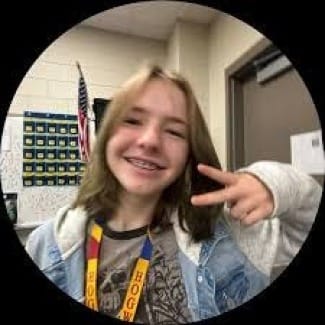
It’s a story about childhood trauma, grief, mental illness, media narratives, and the failures of systems meant to protect vulnerable children before tragedy occurs.
The case is essentially a cultural Rorschach test: what people see in Carly as an irredeemable girl-child monster reflects more about themselves than it does her, as her case is far too tragic and complex to judge that simply.
Thankfully, the Mississippi Supreme Court has granted oral arguments for Carly Gregg’s appeal scheduled for May 27, 2026, following a push from advocates.
Compassion and justice aren’t always in opposition, and compassion doesn’t require denying the pain caused by the crime.
Sometimes, the lack of compassion after a tragedy causes more innocent people more pain — a home sliding into a sinkhole that just opened beneath its foundation.
Real justice requires recognizing that sometimes the people who commit devastating acts are themselves deeply broken long before the world notices.
And maybe it’s our mature adult responsibility to stop turning a blind eye away from the suffering of our children due to the traumatic world they’re surviving that we’ve allowed them to inherit.

If you’d like to support my writing, check out my books or Buy Me a Coffee.
Subscribe to my blog, Blooming on the Borderline!
A new blog sent to your email twice a week for $5 a month.




For individual coaching to recover from narcissistic abuse, BPD, or sexual assault, visit https://am-champion.com
For a copy of any of my books, check out this link:

Anne M. Champion is the author of This is a Story About Ghosts: A Memoir of Borderline Personality Disorder (KDP, 2024), Hunted Carrion: Sonnets to a Stalker (KDP, 2024), She Saints & Holy Profanities (Quarterly West, 2019), The Good Girl is Always a Ghost (Black Lawrence Press, 2018), Book of Levitations (Trembling Pillow Press, 2019), Reluctant Mistress (Gold Wake Press, 2013), and The Dark Length Home (Noctuary Press, 2017). Her work appears in Verse Daily, diode, Tupelo Quarterly, Prairie Schooner, Crab Orchard Review, Salamander, New South, Redivider, PANK Magazine, and elsewhere. She was a 2009 Academy of American Poets Prize recipient, a 2016 Best of the Net winner, a Douglas Preston Travel Grant recipient, and a Barbara Deming Memorial Grant recipient. She has degrees in Behavioral Psychology and Creative Writing.